Bathsheba marries Gabriel Oak
Far from the Madding CrowdBathsheba marries Gabriel Oak after a long, uneven history in which his steady affection outlasts her attachment to other men and her own changing circumstances. The ceremony is deliberately private, but the marriage becomes more than a romantic resolution: it reunites the two as companions whose affection has grown through work, hardship, and familiarity, and it places Bathsheba’s future beside the person who has repeatedly helped sustain her farm and independence.
Background: Independence, loss, and friendship
Bathsheba’s marriage to Gabriel comes after her marriage to Sergeant Troy has left her in an uncertain and painful position. When Troy is absent, Bathsheba feels both surprise and relief, but neither feeling develops into a confident expectation about the future. She believes that he will return and that their tenancy of Weatherbury Upper Farm may then end. Her place on the farm had once been questioned because she was young and a woman, but her uncle’s will, his confidence in her abilities, and her energetic management of the livestock had established her credibility with the estate’s agent. Marriage has left the legal effect on her position unresolved; with the January rent-day approaching, she fears that losing the farm would mean poverty.
Gabriel’s regard for Bathsheba has persisted through their changing positions. He once worked for her, and after Troy’s death he attends sales and fairs on her behalf, conducting her business alongside his own. Their bond is not formed solely from idealized courtship: they know one another through the practical demands of farm life, including its less flattering and more difficult sides. The account presents this shared experience as the ground on which a durable affection can develop.
The withdrawal that prompts a reckoning
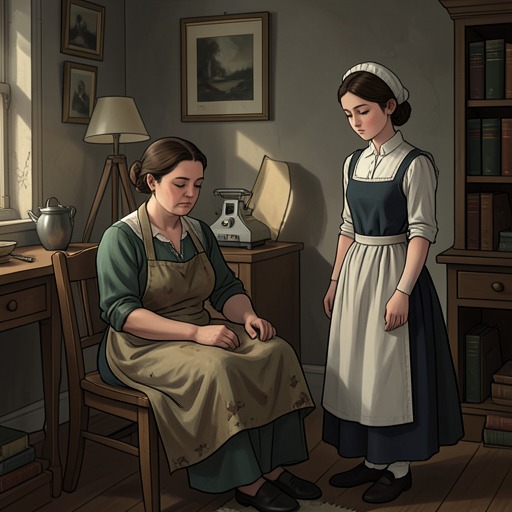
The prospect of losing Gabriel’s help makes his formal notice that he will not renew his engagement with Bathsheba especially painful. She has come to regard his hopeless love as a lasting assurance, and the letter seems to withdraw both a friendship and the practical support on which she has increasingly relied. After sitting with her grief, she goes to Gabriel’s home after sunset, hoping to learn whether she has offended him and why he intends to leave.
Their conversation reveals that Gabriel’s decision is not a punishment or a withdrawal of affection. He has arranged to take Little Weatherbury Farm into his own hands at Lady Day, but he explains that he could have continued helping her if their association had not become the subject of gossip. The talk has made him fear that his presence, and the known fact that he has feelings for Bathsheba, may injure her reputation. His notice is thus an attempt to protect her good name, though she has experienced it as abandonment. The difference between his intention and her interpretation briefly reopens a question that neither has resolved: whether their long-standing affection can become marriage.
When Gabriel cautiously asks whether she would allow him to love and marry her, Bathsheba answers that he will never know because he never asks. His joy makes clear how long he has waited for an opening, while her first response is shaped by the hurt of his letter. She accuses him of seeming ready to desert her, then learns that concern for public opinion—not indifference—had motivated his decision. The exchange turns a painful separation into a direct acknowledgment of their feelings.
A private wedding arranged
Some time after that meeting, Bathsheba tells Gabriel that she wants the most private and secret wedding possible. He thinks through the arrangements and obtains a licence in Casterbridge. On his way back, he meets Jan Coggan, who has remained loyal to him through his unhappiness over Bathsheba. Gabriel confides that he and Bathsheba mean to marry the following morning, explaining that she is shy and nervous about having the parish watch her. The secrecy is presented as her preference, not as a rejection of the community or of the marriage itself.
Their effort to keep the plan quiet becomes a small practical comedy. Gabriel and Coggan go to find Laban Tall, the parish clerk, but learn that he is away until late. Coggan proposes a cover story to avoid alerting Laban Tall’s wife. He tells her that Laban is wanted to witness legal work concerning a long-term farming arrangement, while passing on the real instruction that he must meet Bathsheba near the church entrance at ten the next morning and wear his best clothes. The cover story, and the carefully timed message, show the couple’s determination to make the wedding unobtrusive while still assembling the people needed for it.
Bathsheba asks Liddy Smallbury to wake her at seven, saying only that she has something important to do. She wakes much earlier on her own, convinced that her watch has stopped, and summons Liddy to help brush her hair. When Liddy asks what is happening, Bathsheba says that Gabriel is coming to dine with her. Liddy worries about what people may say, given the talk already circulating about the two of them. Bathsheba answers in a whisper, and Liddy understands that the visit signals their marriage. Bathsheba’s excitement is accompanied by an acknowledgment that the choice can no longer be withdrawn.
The ceremony and its public aftermath
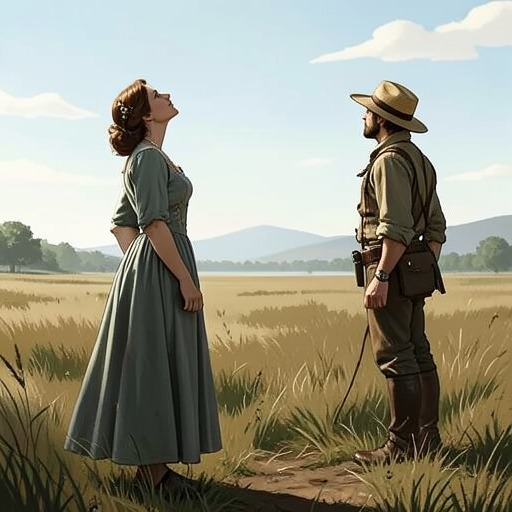
On the damp morning, Gabriel walks up the hill to Bathsheba’s house. They set out on foot beneath umbrellas for the church, which is only a quarter of a mile away. They walk arm in arm for the first time in their lives. Their clothing is plain and practical: Gabriel wears a greatcoat, while Bathsheba wears a cloak reaching to her clogs. At Gabriel’s request, she has arranged her hair as she wore it years earlier on Norcombe Hill. The ceremony, attended by Laban Tall, Liddy, and the parson, is brief.
The couple return to Bathsheba’s parlour for tea that evening. It has been arranged that Gabriel will live with her, since he has little money, no house, and no furniture worthy of the name, while Bathsheba has more than enough of those resources. This domestic arrangement makes their partnership material as well as emotional: they bring different means to a shared household, and Gabriel’s future plans include taking Little Weatherbury Farm into his own hands.
Their intention to keep the wedding private does not prevent their neighbors from marking the day. A cannon and a burst of music announce a gathering outside the house. Mark Clark and Jan are among those responsible; the group offers congratulations and a toast to the newlyweds. The musicians bring out old instruments associated with Weatherbury’s band, and the celebration is affectionate rather than formal. Jan remarks on how naturally Gabriel says “my wife,” while Jacob Smallbury jokes that such ease usually comes with time. The neighbors’ welcome gives the secluded ceremony a communal coda without undoing the couple’s preference for privacy.
Significance of the union
The marriage resolves the central contrast between Gabriel’s constancy and Bathsheba’s earlier uncertainty, but it does so through conversation and companionship rather than a sudden reversal of character. Their feelings become mutual only after Bathsheba recognizes the importance of Gabriel’s absence and he explains that concern for her reputation, not a lack of care, led him to withdraw. The scene’s emotional turn depends on that corrected understanding: what looked like rejection proves to be restraint, and what Bathsheba had taken for a permanent right to Gabriel’s love becomes a choice she must finally make explicit.
The conclusion also distinguishes this relationship from romantic passion founded on distance or idealization. Gabriel and Bathsheba have been brought together by practical work and have seen one another’s difficult qualities before their courtship reaches its resolution. Their wedding therefore completes a movement from employer and worker, through friendship and separation, into marriage. Its modest walk to church, brief service, shared tea, and neighbors’ improvised celebration give the ending a domestic scale: the lasting promise lies not in spectacle, but in a life built from mutual knowledge and daily companionship.